

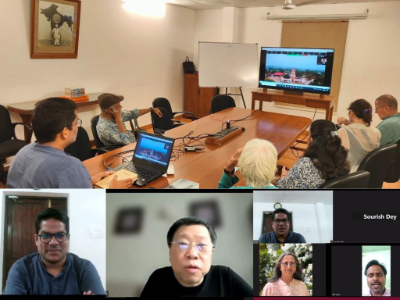
 The International Sanskrit Study and Research Forum, an initiative of AuroBharati, Sri Aurobindo Society, was launched with the objective of introducing Sanskrit in the light of Sri Aurobindo to sincere learners interested in exploring the language in both its spoken and written forms. The Forum seeks to foster a deeper understanding of Sanskrit as a living language and a gateway to India’s rich spiritual, cultural, and intellectual heritage.
As part of this initiative, a session on the theme “Vedic Heritage and Tradition in the Light of Sri Aurobindo” was organized on 10th June, 2026. The session was coordinated by Dr Kishor Kumar Tripathy, Member Secretary, AuroBharati, Sri Aurobindo Society, Puducherry. During the session, Dr Tripathy highlighted the significance of the Vedic Suktas, which have traditionally been chanted in sacred rituals and as an integral part of the spiritual life of Vedic communities.
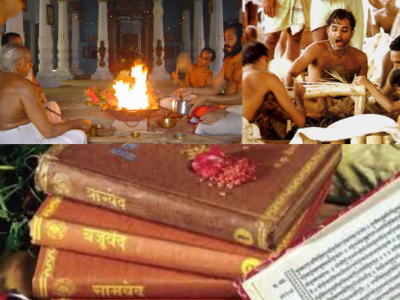 He explained that Vedic chanting represents a highly refined oral tradition in which sound, rhythm, intonation, and mantra work together to elevate consciousness and create inner harmony. Each mantra carries not only linguistic meaning but also profound vibrational and spiritual significance, expressed through precise rhythmic patterns.
The session explored the beauty, depth, and transformative power of Vedic chanting while examining its philosophical and spiritual dimensions through the insights of Sri Aurobindo. Participants gained a deeper appreciation of the sacred sound tradition of the Vedas, its poetic richness, and its enduring relevance in contemporary life.
The discussions also emphasized Sanskrit as the sacred language of the Vedas and a living heritage renowned for its luminous poetry, profound symbolism, oral precision, and enduring cultural significance. Participants were introduced to the ways in which Sanskrit continues to inspire seekers, scholars, and practitioners across the world.
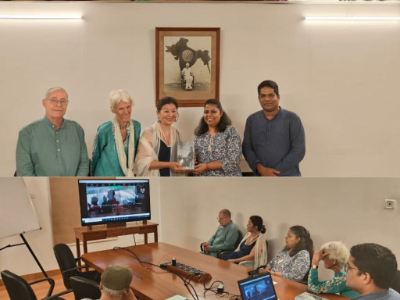 Designed as an immersive and inspiring experience, the program enabled participants to engage with the beauty, depth, and contemporary relevance of Sanskrit and the Indian knowledge systems associated with it. The Forum welcomed participants from diverse age groups and backgrounds, reflecting its inclusive vision of making Sanskrit accessible to all who wish to connect with this timeless language and its intellectual heritage.
The successful conduct of the first session marked an important beginning for the International Sanskrit Study & Research Forum and laid the foundation for sustained engagement with Sanskrit studies, Vedic wisdom, and the deeper dimensions of Indian culture and spirituality.
Academicians and researchers from institutions across India, Brazil, Thailand, the USA, and Spain attended the session.